

Key Takeaways to Increase Patient Volume with Healthcare Analytics
- Improve scheduling convenience — a patient engagement solution lets you enable self-scheduling, reminders, and online communication to reduce no-shows and increase completed visits.
- Centralize and analyze practice data — you can use analytics from your EHR, PM, and engagement systems to identify growth opportunities and operational gaps.
- Understand patient demographics and demand with analytics so you can tailor services and outreach to match community needs and attract more patients.
- Empower data-driven outreach strategies with analytics and focus marketing on the channels and patient segments that generate the most appointments.
Understanding how to increase patient volume is critical for the long-term sustainability of any medical practice. And increasing visits isn’t just about running ads or hoping for referrals — it’s about working smarter.
With the right analytics tools, your practice can uncover patterns in patient behavior, identify operational bottlenecks, and build more effective outreach strategies. The result? More appointments booked, fewer no-shows, and stronger patient retention.
This article walks through how to use healthcare analytics to increase patient volume and strengthen the overall performance of your practice.
What Is Healthcare Analytics?
Healthcare analytics is the process of collecting and interpreting data about your practice to uncover trends, measure performance, and guide decision-making. Analytics gives you valuable insights into areas like:
- Patient demographics and behavior
- Appointment patterns and no-show rates
- Operational efficiency
- Revenue performance and payer mix
- Clinical outcomes and quality measures
When used effectively, healthcare analytics can help you make better decisions that directly impact your practice’s patient growth and satisfaction. It can also help you build trust.
6 Steps for How to Increase Patient Volume Using Analytics
1. Optimize Appointment Scheduling and Patient Communication
Convenience plays a big role in where patients choose to receive care — and whether they return. Smart practice management and patient engagement solutions simplify scheduling, charting, billing, and communication. They also free up your staff to focus on patient care instead of administrative tasks.
A strong patient engagement solution lets patients manage more of their own care with features like:
- Self-scheduling appointments
- Viewing lab results and visit summaries
- Securely messaging your practice
- Paying bills online
When patients are more empowered, it improves the patient experience, boosts staff efficiency, and can help reduce missed appointments and no-shows.
And when you use a high-quality tool with real-time analytics and reporting, your practice can analyze your patient engagement and practice management solutions to spot scheduling trends and use predictive insights to anticipate demand. For example, finding optimized time slots for new patient visits. This helps reduce wait times, maximize appointment capacity, and improve patient throughput.
Learn more about Azalea Health practice management software and patient engagement software solutions.
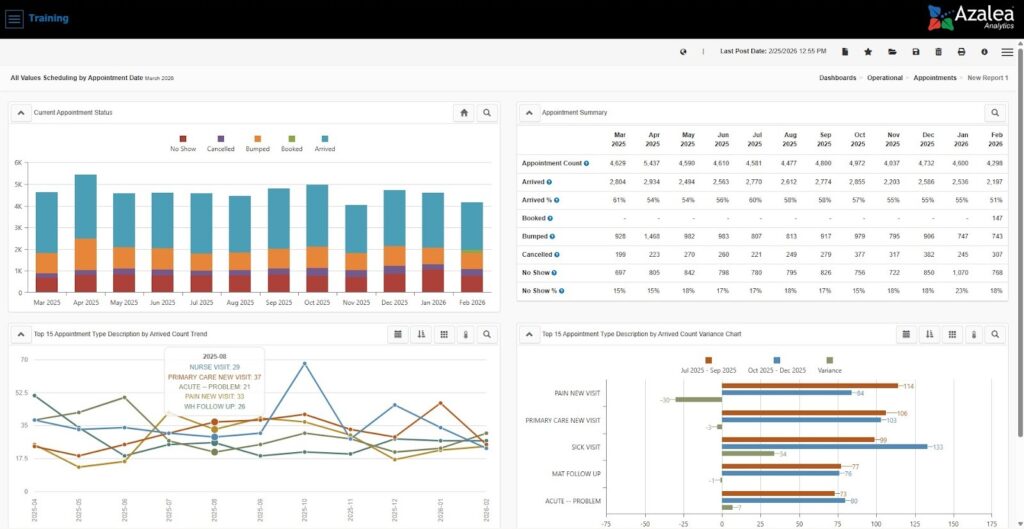
The dashboard in Azalea Healthcare Analytics showing new patients with no-shows, cancelled, bumped, booked, arrived, and more.
2. Collect and Analyze the Right Data
To improve patient volume, you first need visibility into what’s happening across your practice. You can gather data for provider capacity, patient no-show rates, referral-provider patterns for speciality practices, and others from key sources, such as your:
- Electronic health record (EHR)
- Practice management software
- Patient engagement platforms
- Marketing and outreach solutions (including search results, online reviews, and social media marketing analytics)
For analytics to be useful, your data needs to be accurate, comprehensive, and regularly updated (preferably automatically and in real-time).
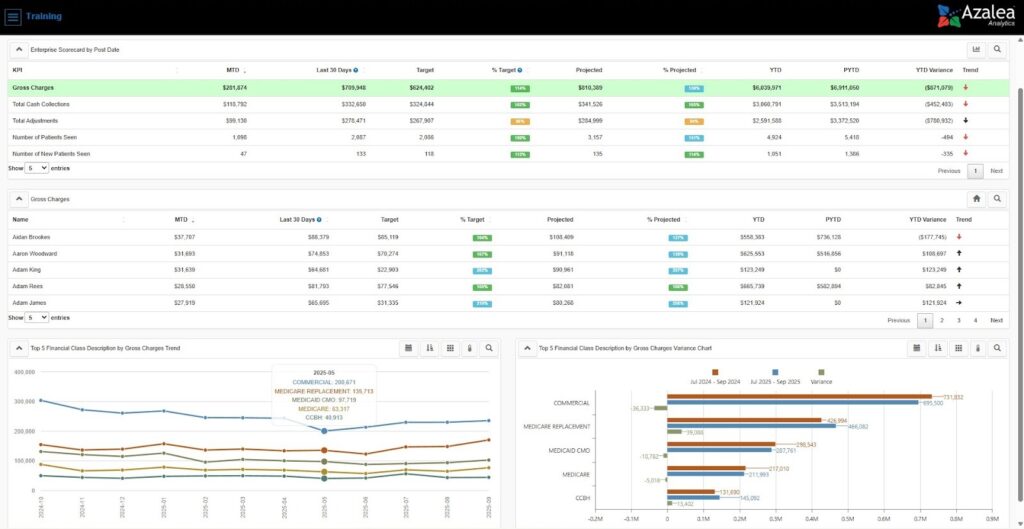
The executive scorecard dashboard in Azalea Healthcare Analytics.
3. Understand Patient Demographics
It’s much easier to increase patient volumes when you understand who your patients are and what they need. And your intake form and analytics can help you segment patients by:
- Age and gender
- Geographic location
- Medical history and diagnosis trends
- Payer mix
- Treatment preferences and utilization patterns
- Preferred social media channels and contact preferences
This information helps you tailor services and outreach strategies to better meet your community’s needs. It can also reveal growth opportunities and creative ways to increase patient volume and engagement. For example, identifying service gaps, high-demand appointment types, or underserved patient populations. A simple example is reaching out to female patients over 40 during Breast Cancer Awareness month with mammogram reminders.
Tip: A centralized analytics solution like Azalea Healthcare Analytics makes using data easier by automatically consolidating reporting and giving you dashboards that support operational and clinical decision-making. It includes easy-to-use prebuilt reports. And it lets you create your own. You can set goals for KPIs and CQMs and easily see performance results on interactive dashboards. It automates reports for administrators, office personnel and clinicians. And it works with other systems, including Athena, NextGen, and more.
4. Monitor Patient Satisfaction and Experience
Patient retention is just as important as attracting new patients. Tracking satisfaction through surveys, reviews, and patient feedback lets you pinpoint what’s working — and what’s driving patients away.
Analytics can highlight trends like:
- Long wait times
- Poor communication
- Scheduling difficulties
- Delays in follow-up or test results
Once you identify issues, you can address them with targeted improvements, such as workflow optimization, better staffing coverage, or streamlined check-in processes. You can also use surveys to ask satisfied patients to share their experiences online, which can help increase volumes as well.
Improving the patient experience increases loyalty, referrals, and repeat visits.
5. Improve Clinical Outcomes and Quality Performance
Patients are more likely to return to a practice they trust. By analyzing treatment outcomes and clinical quality metrics, you can identify best practices, standardize effective care plans, and improve overall outcomes.
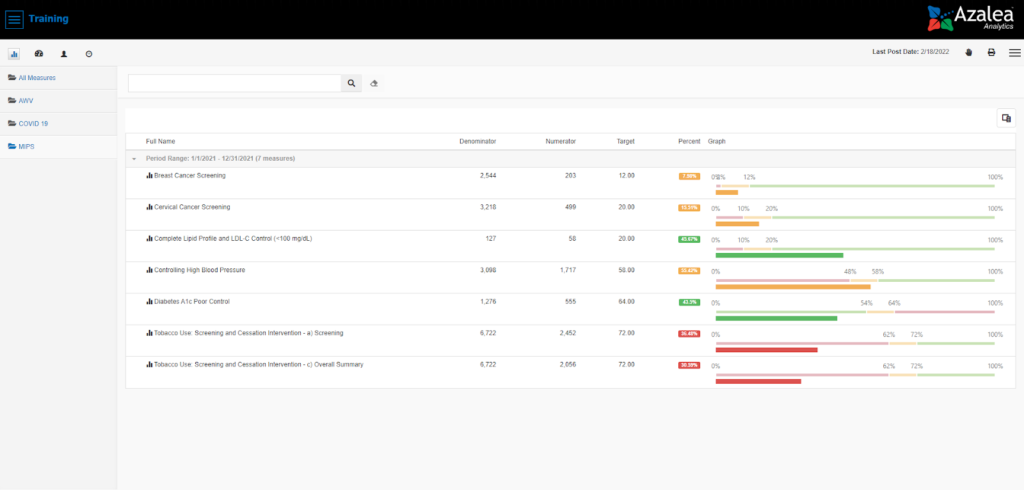
The population health dashboard in Azalea Healthcare Analytics that breaks down key screening data.
Better outcomes lead to:
- Higher patient satisfaction
- Stronger reputation in your community
- Improved provider performance
- Better long-term patient and staff retention
Analytics can also support population health efforts by identifying high-risk patients who may benefit from preventative outreach and proactive care management.
6. Use Data for Smarter Marketing Outreach
Analytics can help you stop guessing what marketing strategies work and start focusing on what actually brings patients through the door.
Data can show you which outreach channels perform best, including:
- Social media campaigns
- Email marketing
- SMS reminders
- Blog posts
- Phone outreach
- Direct mail
- Website performance and online scheduling conversions
- Digital marketing vs offline marketing
It can also help you monitor your online presence. And once you know what works, you can build targeted campaigns tailored to specific patient segments.
For example:
- A rural health clinic may see stronger results from phone calls or direct outreach.
- A fertility clinic or specialty clinic may find email and social media campaigns are more effective.
Targeted outreach lets you improve engagement and increase appointment conversions without wasting your marketing spend.
Benefits of Using Analytics to Increase Patient Volume
Analytics does more than let you generate reports. It lets you uncover practical opportunities to improve care delivery and strengthen performance across your organization. By turning data into clear, actionable insights, you can make more informed decisions that elevate both clinical and business outcomes, and:
Improve Patient Care
You can use analytics to help identify trends in patient conditions and enable earlier intervention and more personalized care. For example, your practice can identify patients at risk for chronic conditions and proactively provide preventative care, which can lead to better outcomes and higher satisfaction.
Enhance Operational Efficiency
Data analytics lets you uncover bottlenecks and streamline processes, such as reducing wait times, improving patient flow, and optimizing staffing schedules. Predictive analytics can even help forecast high-volume periods, so your practice is better prepared.
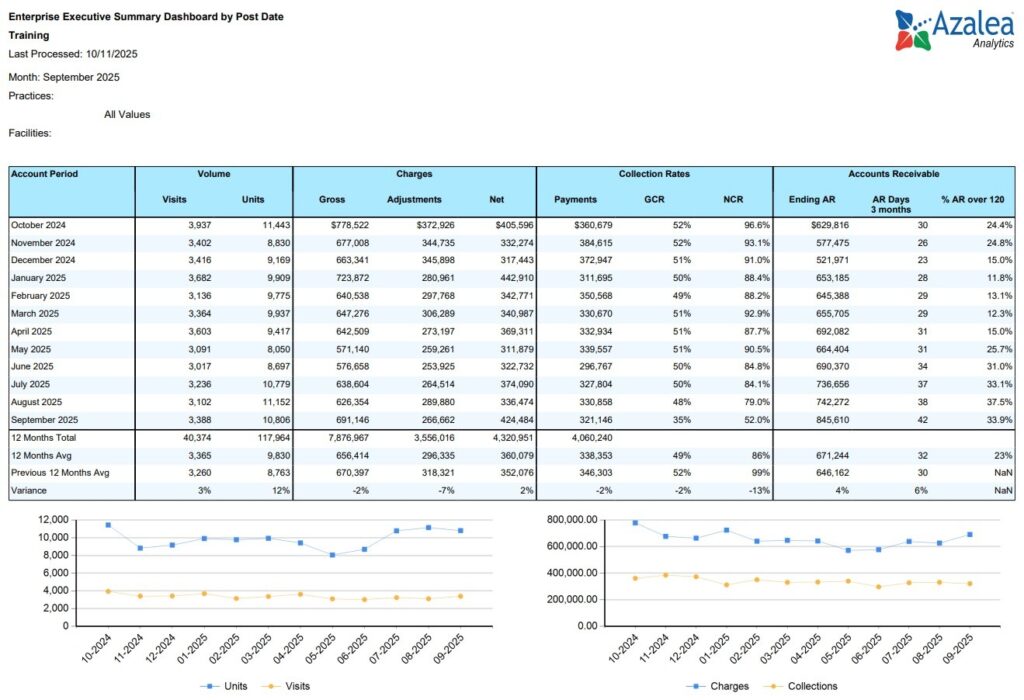
The financial dashboard in Azalea Healthcare Analytics that shows a consolidated look at financial performance across your practice compared to patient volumes.
Increase Patient Volumes, Retention, and Visits
Analytics isn’t only about attracting new patients. It also helps you keep existing patients and bring existing patients in more consistently if needed.
For example, if a patient has high blood pressure, you can use analytics and a good patient engagement solution to trigger automated follow-up reminders every few months to encourage screenings and ensure they stay on track. This supports better health outcomes while increasing repeat visits.
Do More Effective Marketing
Understanding patient behavior and demographics makes marketing more targeted and measurable. Analytics can show you which campaigns and messages resonate best and help you attract new patients and improve long-term engagement. And it’s easy to track where patients heard about your practice during intake.
Bottom Line on How to Increase Patient Volume with Analytics
Healthcare analytics gives your practice the power to make smarter, data-driven decisions that increase efficiency, strengthen patient experience, and drive long-term growth with increased patient volumes and higher patient retention.
By applying the steps outlined here, you can reduce missed appointments, improve patient satisfaction, and create outreach strategies that bring more patients through your doors — both new and returning.
Ready to Take Your Practice to the Next Level?
Explore Azalea Health Healthcare Analytics and start using data to transform patient care today — and increase patient volumes tomorrow.